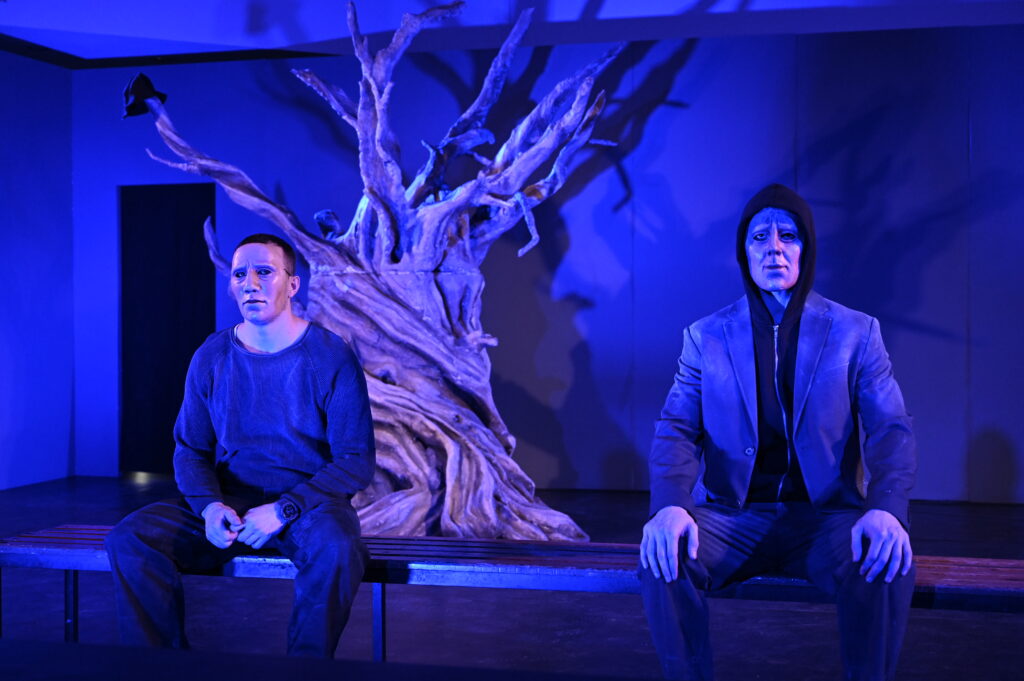
A large hall in a male prison. Usually used for large staff meetings and sports events, it is transformed into a one-hundred-seater theatre. The set, a distorted tree, is placed off-centre whilst three long benches frame the stage. The lighting, sound and video projection equipment would not look out of place in a professional theatre – and that is the point. For aufBruch, a Berlin-based theatre company who specialise in working in prisons, their entire ethos is built on creating professional, high quality theatre productions – the fact that the cast is entirely made up of men serving prison sentences is irrelevant. For the twelve-week duration of the project, when the men enter the hall, they are not prisoners, they are actors, and the rigour and discipline of the sessions look and feel like any other rehearsal space.
We have had the pleasure of collaborating with our colleagues at aufBruch over the last couple of years thanks to funding from Cultural Bridge. We started with Zoom calls between their team and ours, where we discovered shared values and exchanged ideas. Over time, this developed into opportunities to witness each other’s practice in situ.
In 2024, three of their team came to the UK to observe a short, three-day project we were delivering on the substance free wing of HMP Oakwood. Then a reciprocal visit to Tegel Prison in Berlin where two of our team witnessed the final rehearsals and a public performance of Brecht’s Threepenny Opera.
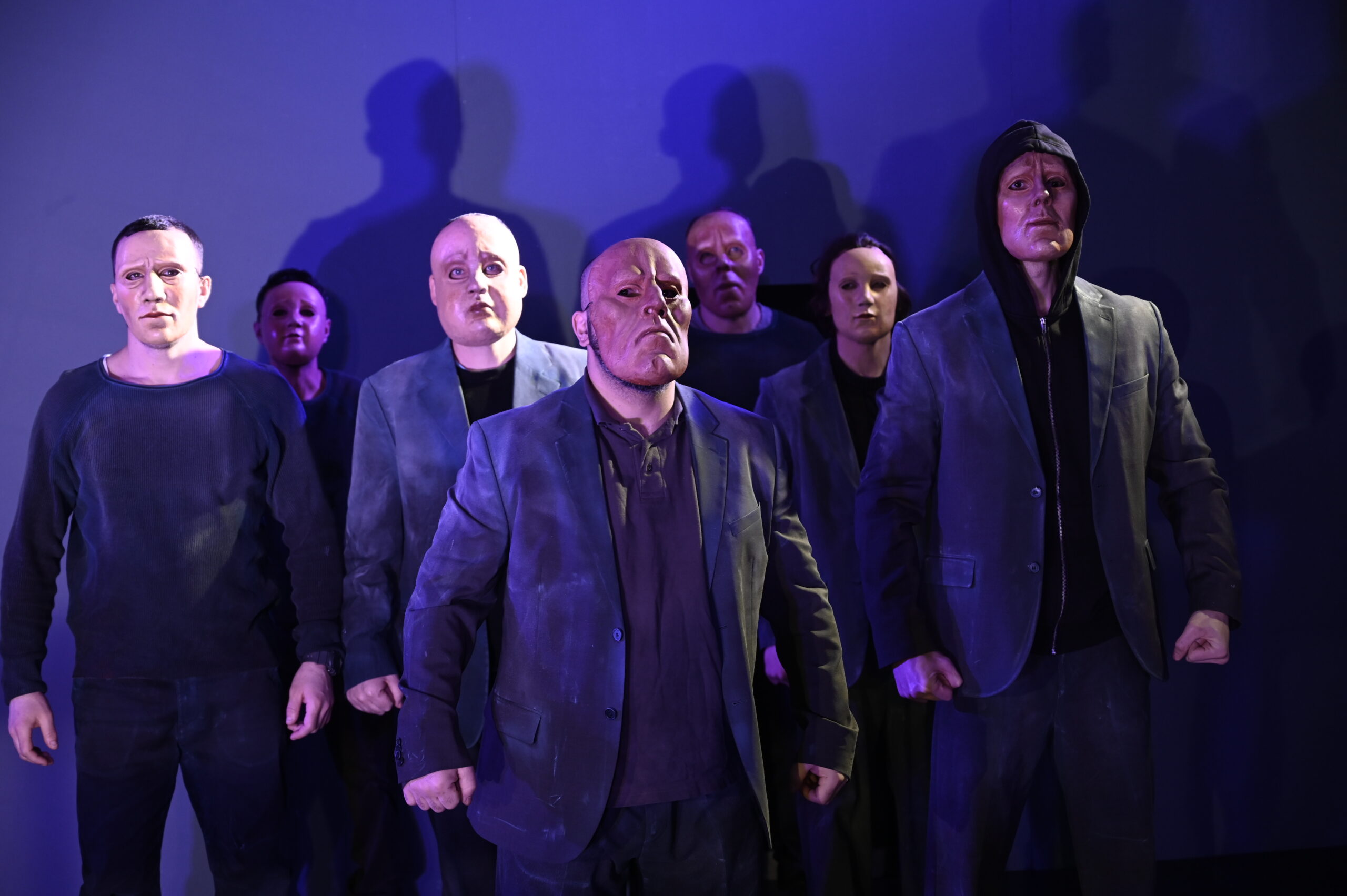
Our most recent collaborations have involved a much closer exchange of practice. In October 2025 we brought the aufBruch team back into HMP Oakwood and worked alongside them as they led a week-long project with a group of ten men. This culminated in a remarkable adapted version of Waiting for Godot, presented in the visits hall to an assembled audience of staff and other prisoners. Much of aufBruch’s work revolves around text, language and chorus work and it was fascinating to see our group of ten men explore Beckett’s dystopian world of waiting, hope and hopelessness, and make direct connections with their own experiences.
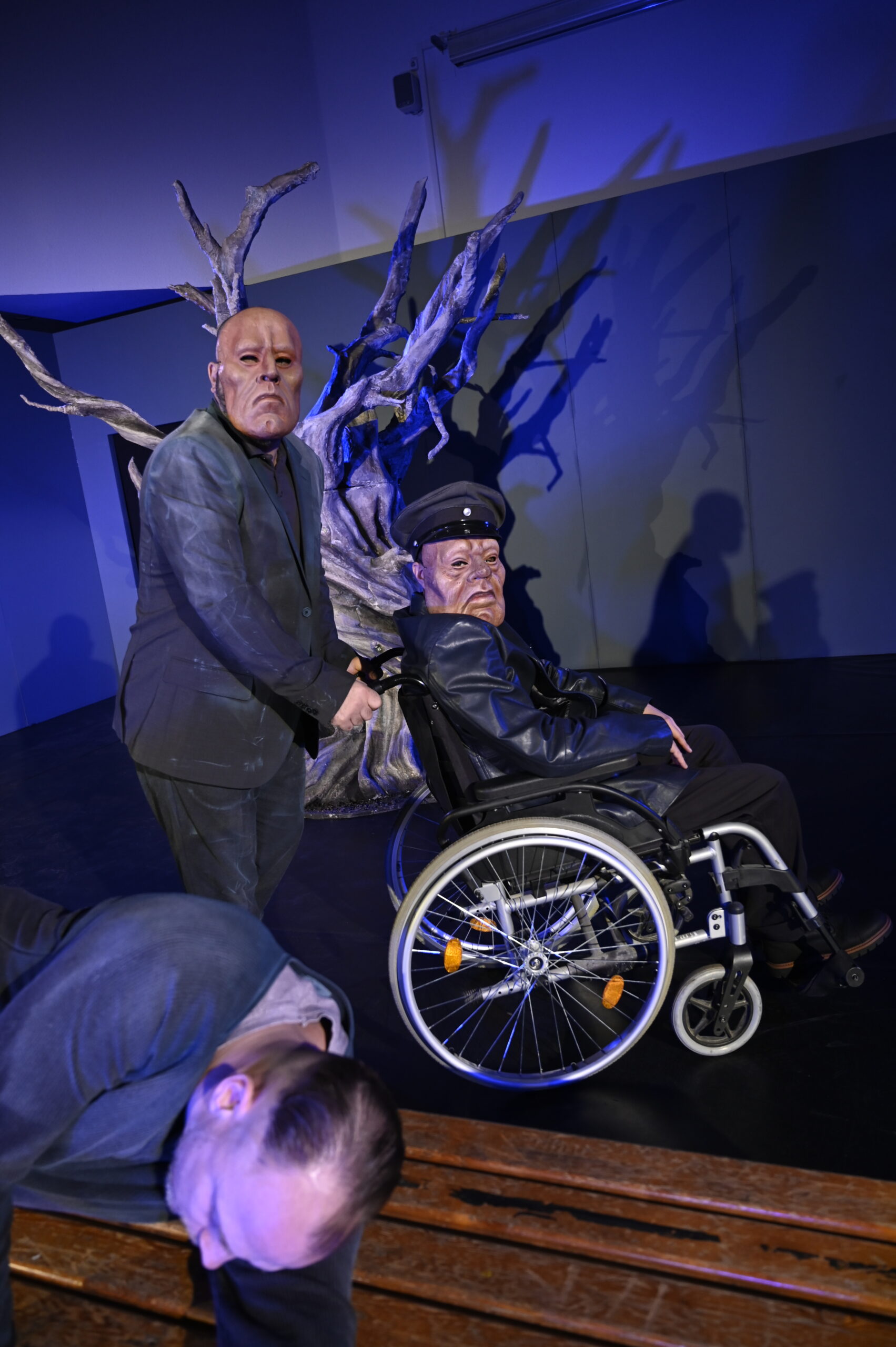
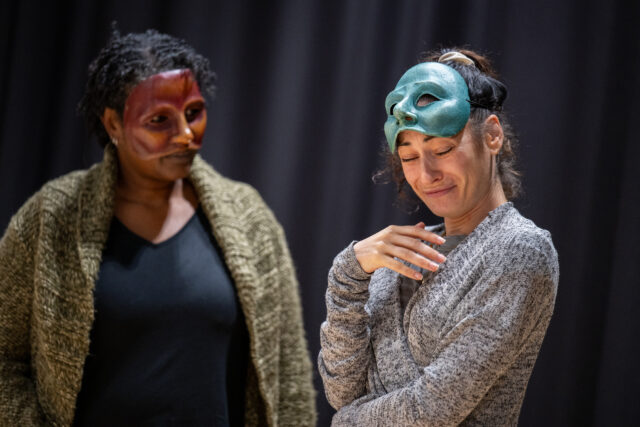
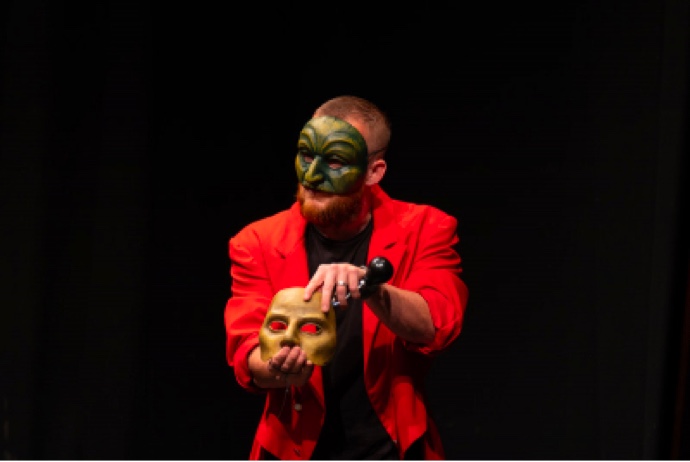
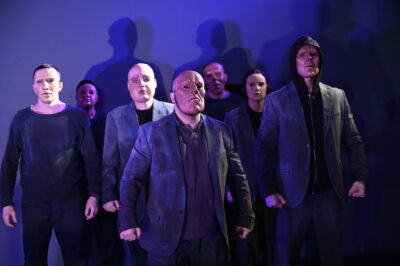
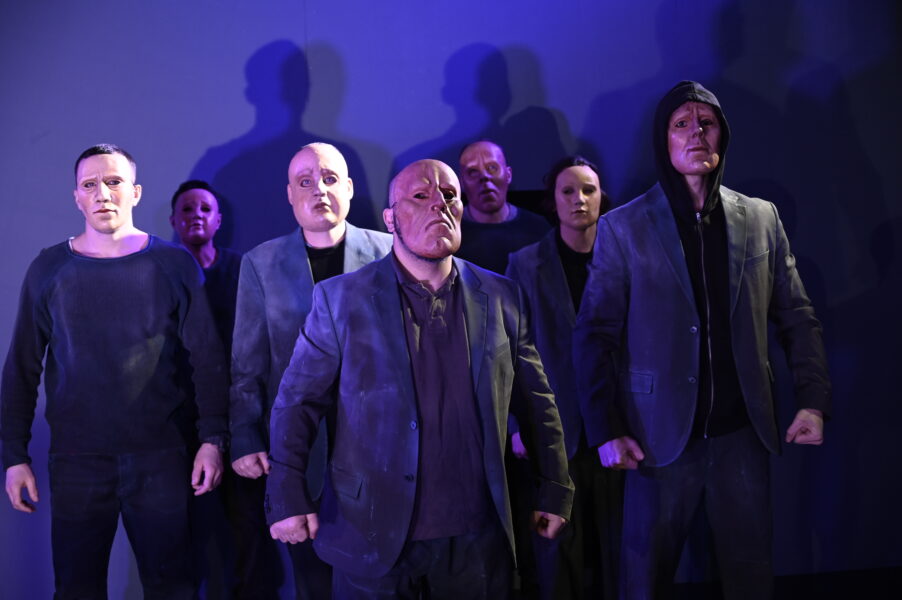
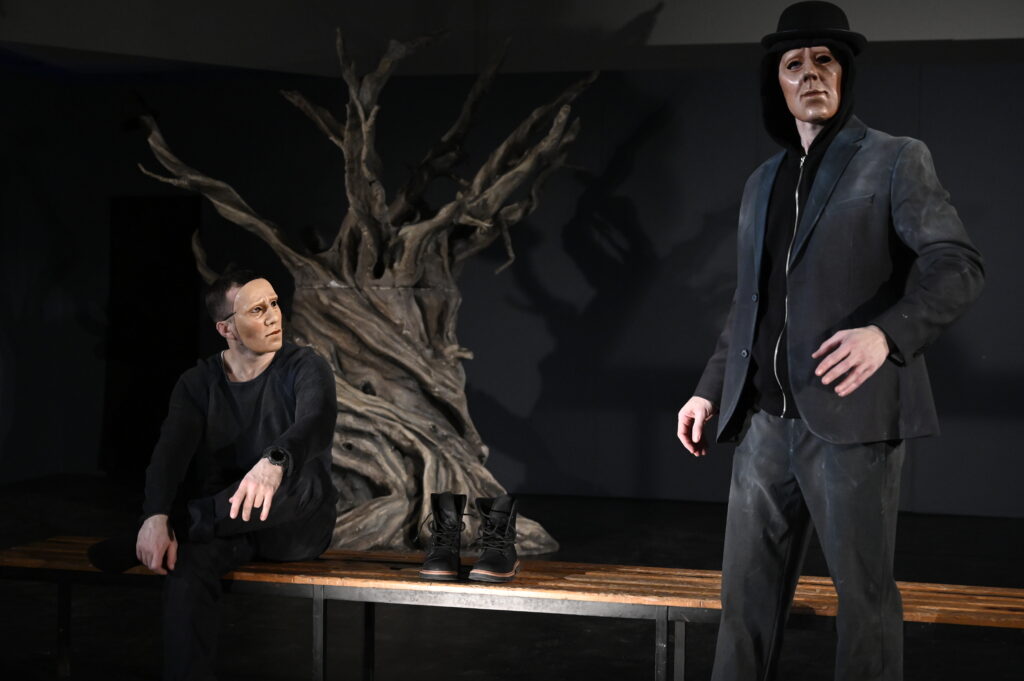
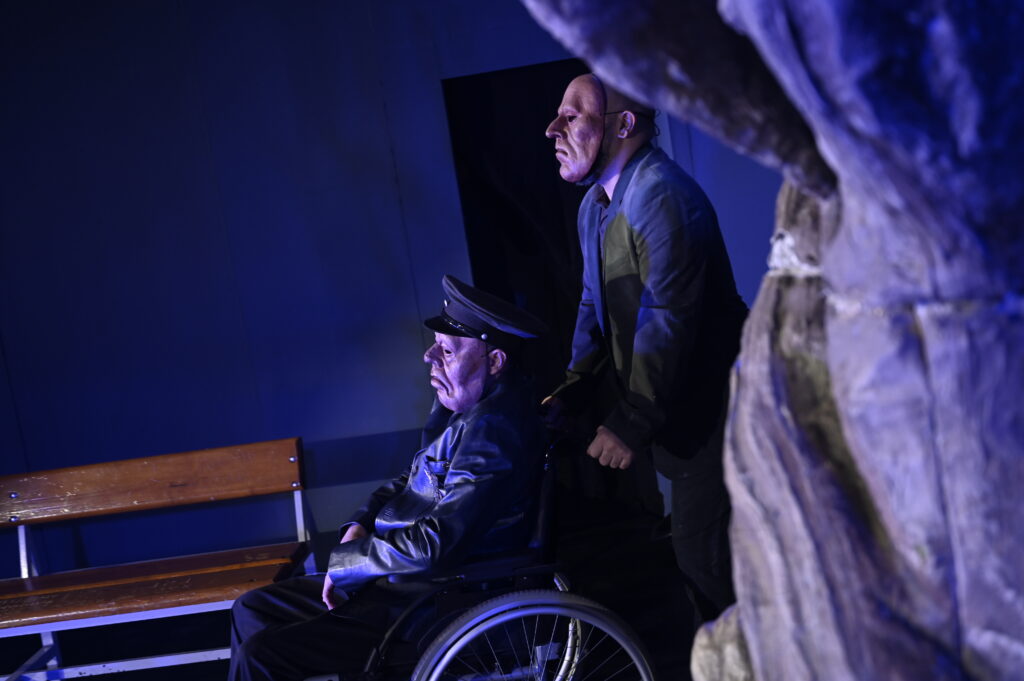
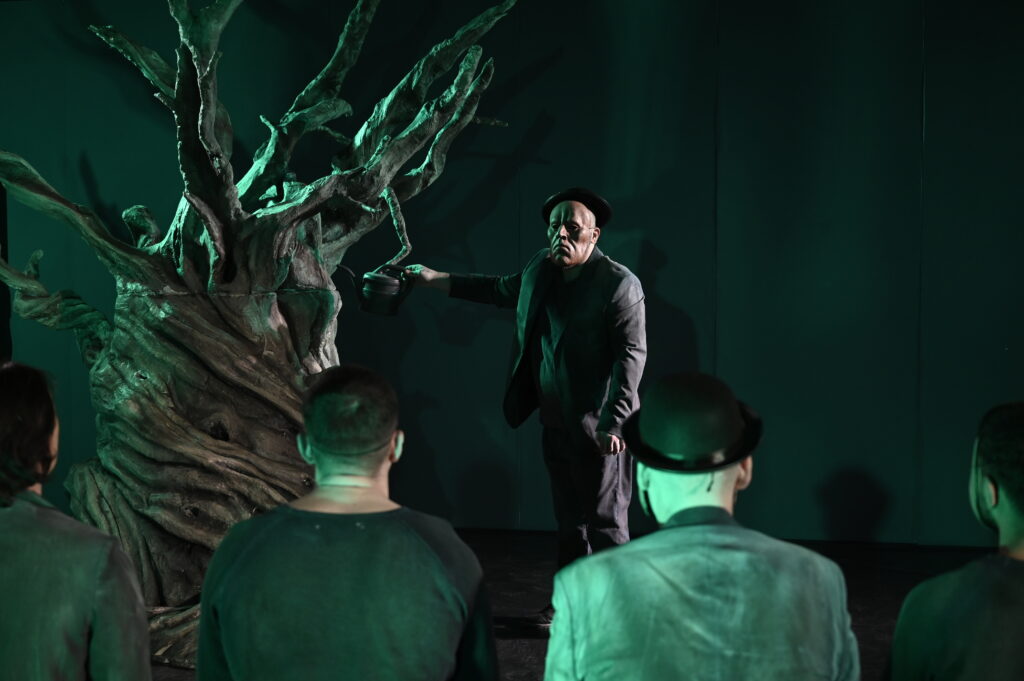
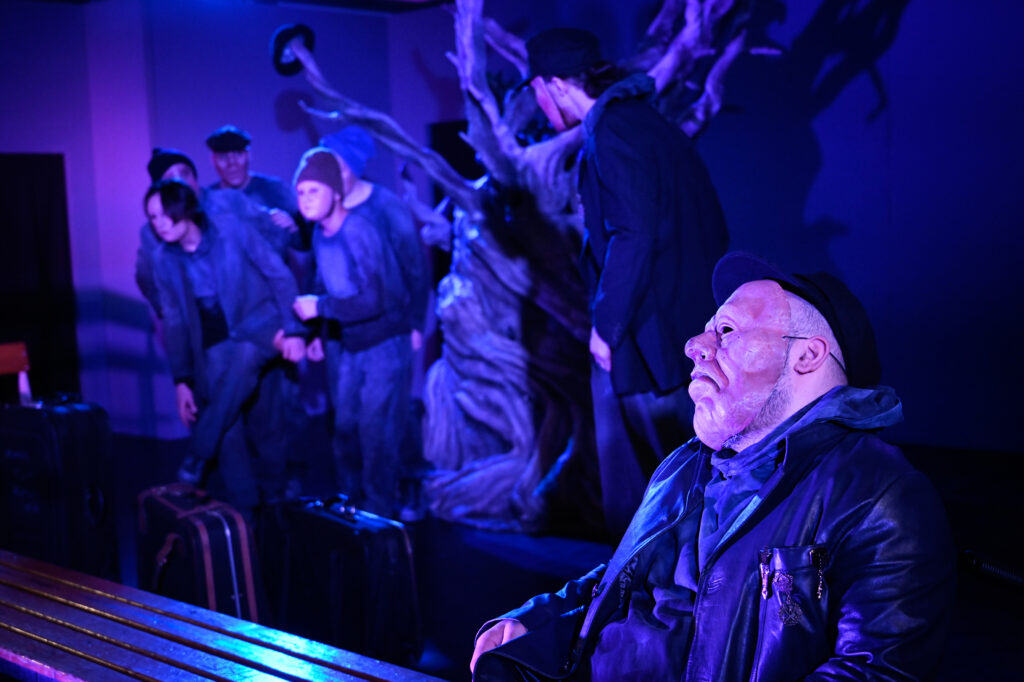
In December 2025 and January 2026, two members of Geese, armed with a suitcase of full masks, joined the aufBruch team and their group of seven men as they developed their own, full-scale performance of Godot. Our role was to work with the men on integrating elements of full-mask performance into their production. Working with masks is obviously familiar territory for Geese as mask is one of the main tools we use across all our work. But this was very much new terrain for the aufBruch team and the men we were working with. Of course, the brilliant thing about working in prisons is that, generally, once the groups trust us, they are willing to step out of their comfort zone. And the men from Plotzensee Prison were no different. They experimented, played and took risks with performing in full mask – developing incredible images and scenes which acted both as counterpoints and echoes to the rest of the performance.
The version of Waiting for Godot they created at Plotzensee Prison was performed to capacity audiences of one-hundred people, every night for a run of twelve nights. They created high quality work that any professional theatre company would have been proud of, and it received outstanding reviews from regional and national press.
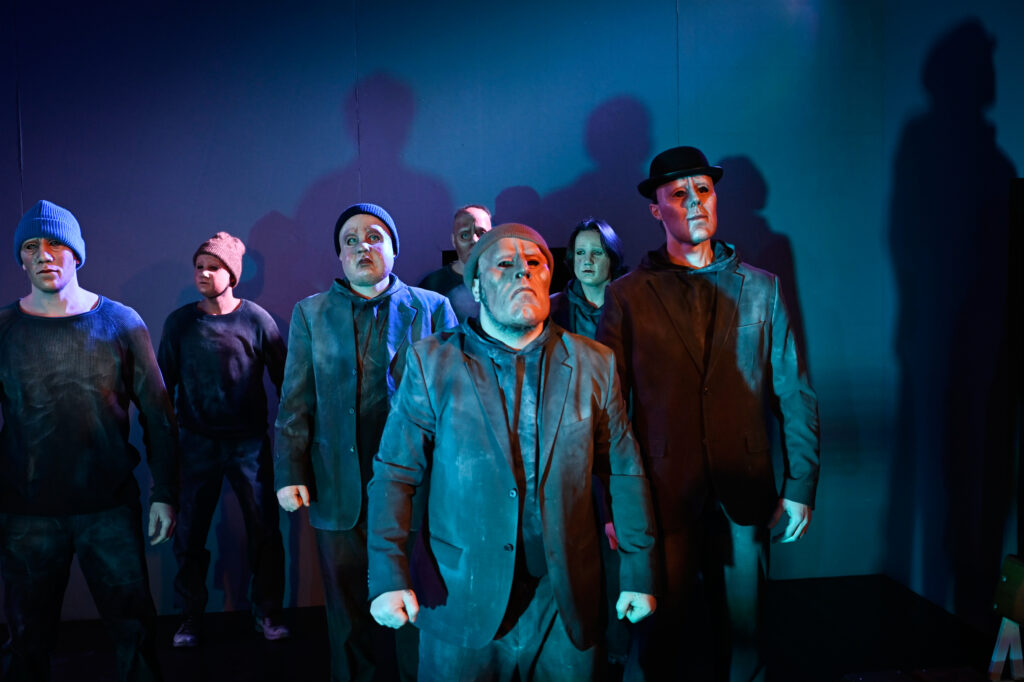
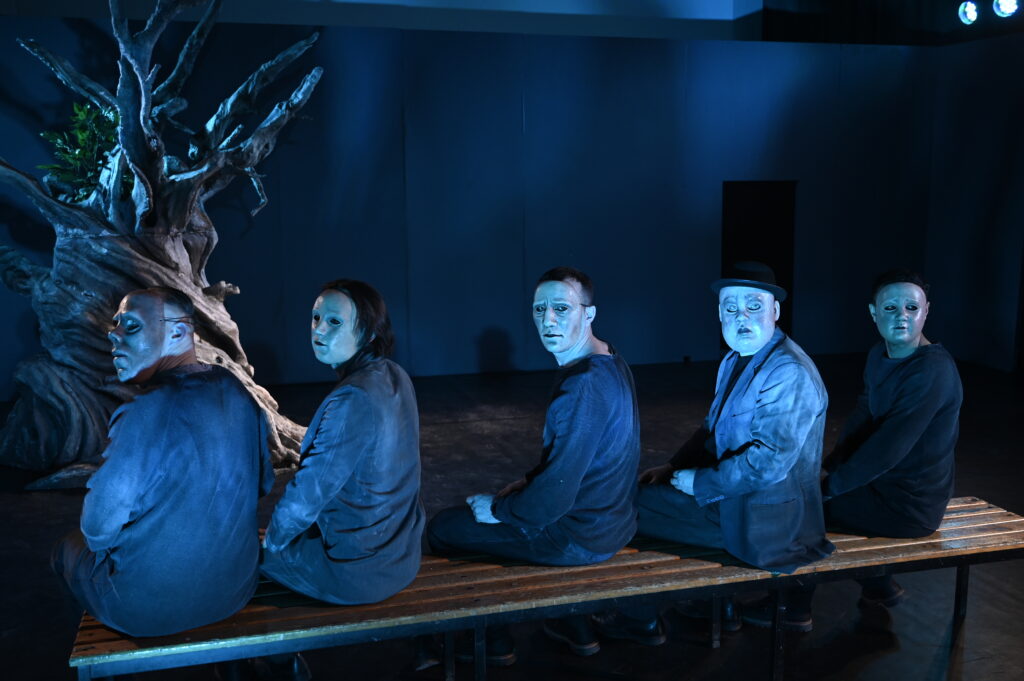
However, for Geese this collaboration was never primarily about the final product. There is something motivating and nourishing about working alongside colleagues from different countries, with different language and histories, but who share similar beliefs and values about the potential for theatre to transform lives. For the men in Plotzensee they had the opportunity to be actors, not prisoners, for three months, and this opportunity to rehearse different versions of self can prove invaluable for people who might feel labelled, othered and stuck. While much of our work at Geese is more short-term and doesn’t often culminate in a performance for the public, the theatre methodology still invites and encourages reflection on the roles we have played in our lives and the roles we might want to play. The men we met in Berlin shared many similar qualities to a lot of the people we meet across the prison estate in the UK – a desire to be heard, a hope for a better future, a willingness to take risks, and an openness to reflect on who they are and how they want to move forward in the world.
This project is funded by Cultural Bridge, which celebrates bilateral artistic partnerships between the UK and Germany through the collaboration between Arts Council England, the Arts Council of Northern Ireland, British Council, Creative Scotland, Fonds Soziokultur, Goethe-Institut London and Wales Arts International / Arts Council of Wales.